Executive Summary
This policy brief draws on the findings from a perspectives-based research study examining access to social
assistance among vulnerable Lebanese households identified within the “bottom poor.” It presents first‑hand
insights of how households perceive and experience social assistance programs, with specific focus on barriers
to access, targeting processes, and feedback and appeal mechanisms. Grounded in these lived experiences the
brief offers practical recommendations to support ongoing efforts to strengthen the inclusiveness, transparency,
and rights‑responsive nature of social assistance in Lebanon, while also underscoring the importance of
sustained financial investment in a strong social security system in Lebanon.
Lebanon’s overlapping crises have deepened poverty and placed additional strain on an already fragile social
protection landscape. In this context, social assistance programmes such as the National Poverty Targeting
Programme (NPTP) and the Emergency Social Safety Net (ESSN), now under AMAN, continue to provide
essential support for many households. At the same time, the perspectives collected in this study suggest that
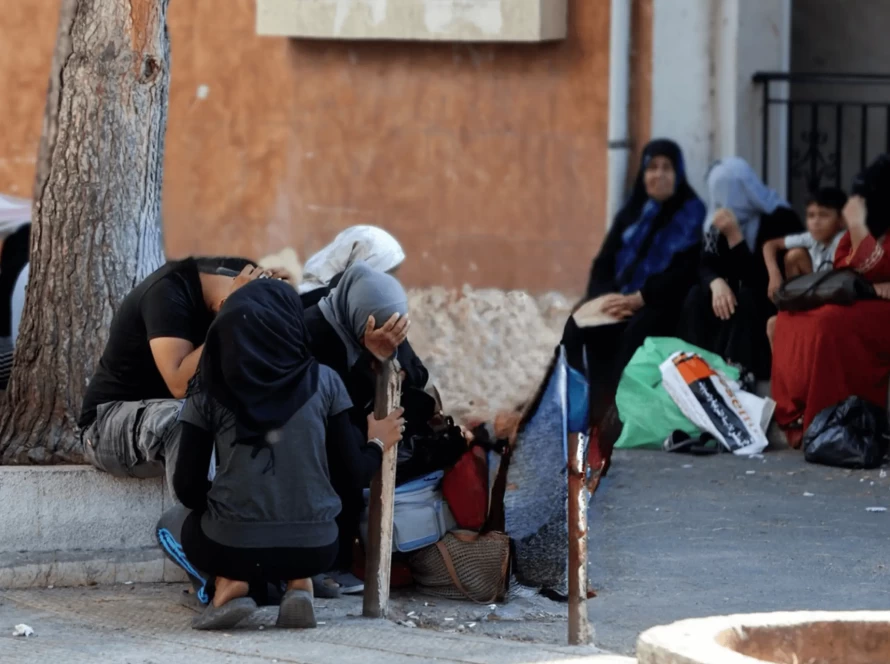
some among the “bottom poor” perceive themselves as underserved or hard to reach. Within this group are
individuals or households experiencing extreme poverty and multiple, overlapping deprivations, including
unstable incomes and limited access to education, healthcare, housing, and nutrition. Many perceive themselves
as persistently excluded from formal systems such as labour markets, social protection schemes, and public
services, and these vulnerabilities are often compounded by gender, age, disability, or geographical marginality.
For this study, multidimensional vulnerability scoring models were used to identify the bottom‑poor quantile
within available databases to guide the sampling of the target population and ensure voices were captured from
those most affected by intersecting forms of deprivation.