Executive Summary
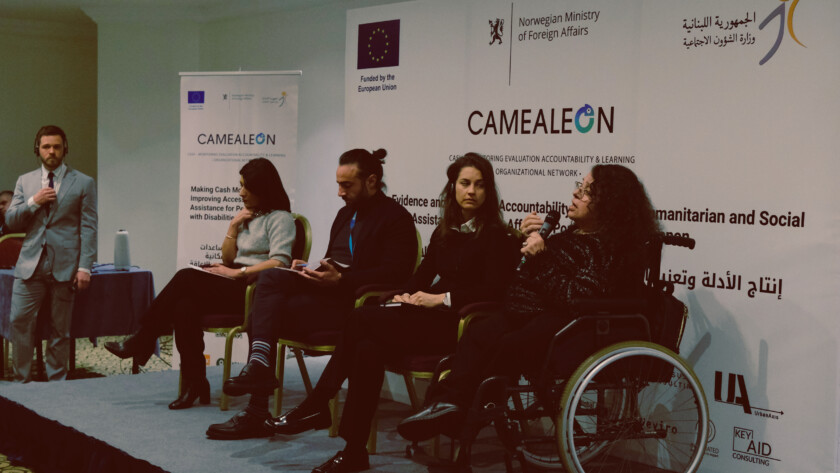
The launch event for the ''Borrowing to Survive'' research was convened as a space for reflection rather than endorsement. Beyond presenting findings on household debt dynamics and cash assistance in Lebanon, the event aimed to create an open conversation among implementers, donors, and coordination actors on what current evidence implies for cash programme…
Executive Summary
In response to evolving assistance approaches and growing needs in Lebanon, the Cash Monitoring, Evaluation, Accountability and Learning Organizational Network (CAMEALEON) convened a dual event on 20 January 2026, under the patronage of the Minister of Social Affairs, H.E. Haneen Sayed, at the Hilton Beirut Habtoor Grand Hotel in Sin El Fil.
The…
Executive Summary
The escalation of hostilities between Hezbollah and Israel and exchange of fire and aerial bombardment of civilian infrastructure since the March 2nd, 2026, has again displaced over an estimated million people from the South of Lebanon, the southern suburbs of Beirut, and areas in the Bekaa-Hermel governorate. In the critical early phases of…
Executive Summary
This policy brief draws on the findings from a perspectives-based research study examining access to social assistance among vulnerable Lebanese households identified within the “bottom poor.” It presents first‑hand insights of how households perceive and experience social assistance programs, with specific focus on barriers to access, targeting processes, and…
Executive Summary
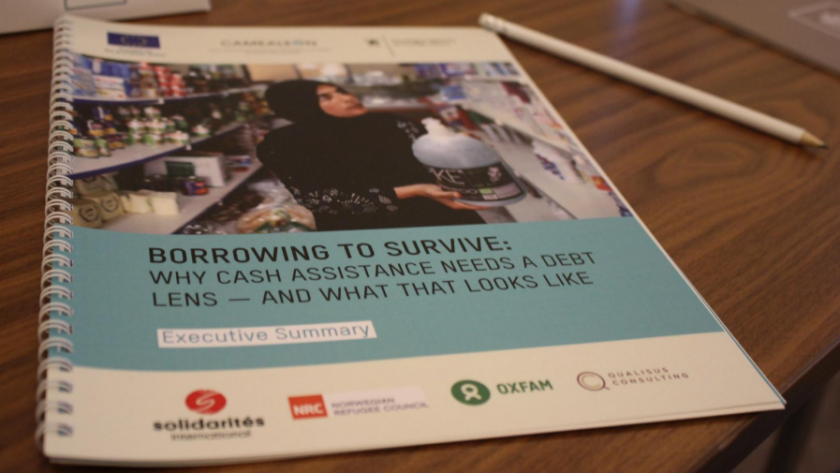
Debt is widely recognized as a double-edged instrument: at the macro level, it can fund growth and essential services, but at the household level, it often represents both survival and constraint. In fragile settings, where formal safety nets are limited, borrowing increasingly serves as a de facto social protection…
Executive Summary
This Final Report presents the main findings of the research assignment conducted for Solidarités International (SI), in collaboration with Mercy Corps (MC), under the CAMEALEON consortium. The study assesses the relevance, suitability, and adaptability of Cash Plus programming in Lebanon, with a particular focus on the Beqaa region. …
Executive Summary
This policy brief examines the current cash coordination landscape in Lebanon, highlighting how fragmented governance and inconsistent approaches continue to affect assistance quality, equity, and efficiency. It outlines recent coordination reforms and identifies remaining gaps in mandate clarity, decision-making, and system alignment. The brief presents five priority recommendations to strengthen technical leadership, reinforce MPCA, improve…
Executive Summary
Since 2019, Lebanon’s protracted crisis has eroded livelihoods and driven much of the population into poverty, leaving many households reliant on social protection schemes and humanitarian cash and voucher assistance (CVA). Cash-based assistance is especially important for households with people with disabilities. They face the same crisis-related problems as the general population.…
Executive Summary
Since 2019, Lebanon has faced a series of overlapping crises, including economic collapse, the COVID-19 pandemic, the Beirut Port explosion, and the 2024 Israeli war, that have severely strained its already fragmented and under-resourced social protection system. In this context, social assistance programmes such as the National Poverty Targeting Programme (NPTP), and the…
Executive Summary
This report offers an in-depth analysis on cash coordination in Lebanon, focusing on recent structural reforms, persistent coordination challenges, and opportunities for improved alignment with global standards. Drawing on 42 key informant interviews (KIIs), three workshops, and an extensive document review, the study critically assesses the evolution of Lebanon’s cash architecture, with particular…
Executive Summary
Following six years of multiple protracted crises, a majority of Lebanon’s population is affected by multidimensional poverty, but social safety nets are the primary source of social protection for the poorest and most vulnerable and are largely dependent on international donors. In an effort to transition out of the crisis, the Government of…
Executive Summary
Lebanon is facing a severe humanitarian crisis exacerbated by economic turndown, widespread poverty, and displacement resulting from the escalation of the hostilities into war between Hezbollah and Israel on September 23, 2024. A ceasefire was reached in the early hours of November 27, 2024, for a 60-day period. The dramatic wave of…