Executive Summary
CALP Community of Practice online meeting on 30 May on Vulnerability and poverty measurement, organized in collaboration with CALP.
CALP x CAMEALEON - Vulnerability & Poverty Measurement Presentation
Executive Summary
An online workshop was held on 7 August 2024 to present CAMEALEON's study titled “The Role of Misinformation on CVA for Social Cohesion in Lebanon.” Facilitated by Key Aid Consulting, the session brought together CVA implementing partners and end users to validate and strengthen the study’s relevance. The workshop presented triangulated findings…
Executive Summary
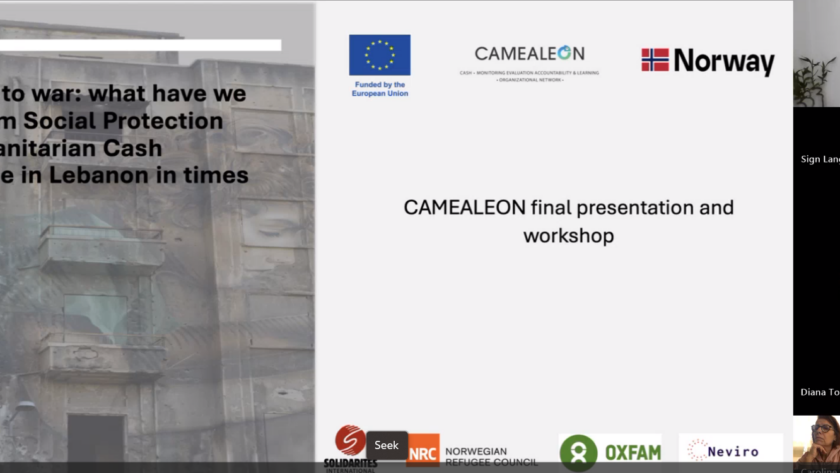
This event aimed to synthesise findings from a multi-year research agenda conducted by the CAMEALEON Consortium, examining how different layers of response—state-run social protection, humanitarian cash and voucher assistance (CVA), and informal support systems—have functioned in times of peace and under stress during the escalation of hostilities.
Across CAMEALEON’s research, a consistent finding…
Executive Summary
Building on CAMEALEON’s study on “Cash for Rent Assistance in Lebanon,” the presentation and dissemination event recording below, held in April 2026, summarize the key findings, recommendations, and reflections on the CfR model in Lebanon.
Cash for Rent (CfR) Assistance in Lebanon - Dissemination Event Presentation 2026
Cash for Rent (CfR) in Lebanon…
Executive Summary
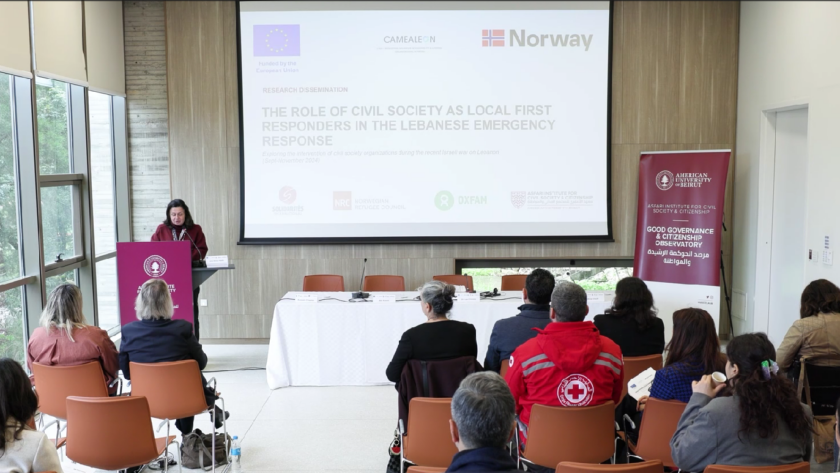
Building on the policy brief on CAMEALEON's study on ''The Role of Civil Society as Local First Responders in the Lebanese Emergency Response'', in partnership with the AUB Asfari Institute of Civil Society and Citizenship, the below Presentation was showcased during the study's dissemination event which took place in February 2026.
The Role…
Executive Summary
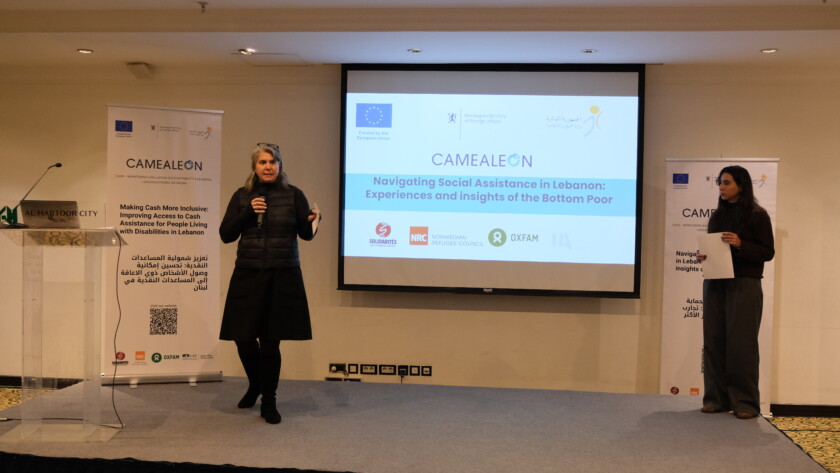
Building on CAMEALEON’s study on the Bottom Poor and their access to social assistance programmes, the public webinar recording below presents the study’s key findings and recommendations, as shared during a webinar held on 21 January 2026 as part of CAMEALEON’s dual event.
CAMEALEON Dual Event 2026 Public Webinar on Bottom Poor Study…
Executive Summary
Cash for Rent (CfR) in Lebanon has worked well as a time bound protection and stabilization tool. It helps households avoid immediate eviction, remain in safe and adequate accommodation during the assistance period, and reduces acute stress linked to arrears. It does not, in most cases, create durable housing security once payments stop,…
Executive Summary
The report examines pathways to self-reliance by documenting how crisis affected households attempt to meet basic needs through income diversification and through community support networks, and how the 2024/2025 displacement reshaped these pathways. It synthesizes qualitative evidence collected in 2025 across five CAMEALEON research streams, drawing on 237 interviews across multiple governorates and…
Executive Summary
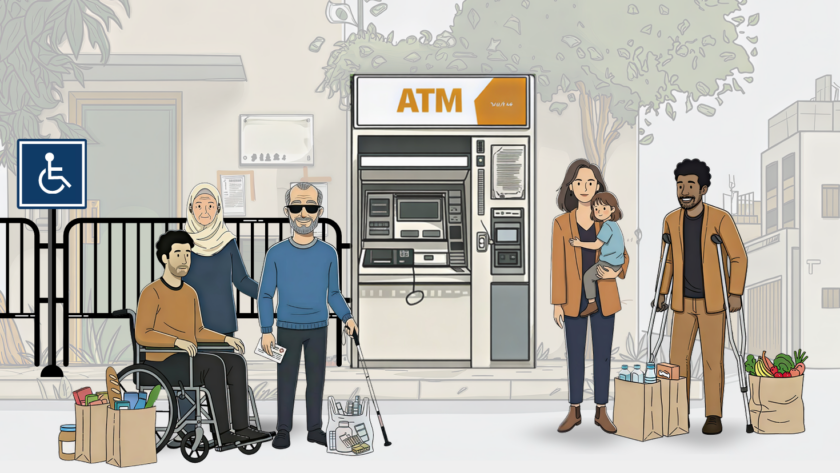
Lebanon’s compounding economic and conflict-related crises have disproportionately impacted older persons, increasing their vulnerability. With nearly 80% of the population lacking formal pension coverage, current cash assistance and social protection (SP) systems remain fragmented, digitally exclusionary, and misaligned with critical health needs. While national programs like AMAN have expanded, coverage remains low, with…
Executive Summary
This research, commissioned by the CAMEALEON consortium, addressed a critical evidence gap by documenting the lived experiences of vulnerable older persons to inform the design of more inclusive, dignified, and sustainable humanitarian and social protection programming. The study employed a qualitative, participatory approach across four governorates (Bekaa, Beirut and Mount Lebanon, North Lebanon,…
Executive Summary
This study examines the role of civil society organizations in Lebanon’s emergency response landscape, with a focus on the 2024 Israeli war (17 September–28 November 2024). It situates these findings within a broader historical and regional context, analyzing Lebanon’s experiences across multiple crises, including the civil war (1990–1975), the 2006 Israeli war, the…
Executive Summary
The Disability Inclusion Working Group in Lebanon, launched in November 2025, is a strategic, multi-stakeholder platform designed to integrate disability inclusion into development, humanitarian, and recovery efforts. Co-chaired by the ILO and the Lebanese Union for Persons with Disabilities (LUPD), it brings together 11 UN agencies, the Ministry of Social Affairs (MoSA), and NGOs to…